
10 Common Mistakes in Abbey History Research: Sources You Might Overlook
Most abbey research fails not because records are lost but because the obvious ones are overused, while cartularies, wills, estate maps and excavation reports go unread.
You know the abbey is there. You have the boundary wall, the gatehouse, a handful of charters, and a printed history from 1903. What goes wrong next is rarely that the records have vanished. It is that the useful ones sit in another building, catalogued under a different name by someone who did not recognise what they had.
The ten mistakes below cost researchers months. Most come down to one habit: reading what is easy to find, and assuming that what is easy to find is what matters.
Mistakes 1 and 2: Trusting the familiar sources too far
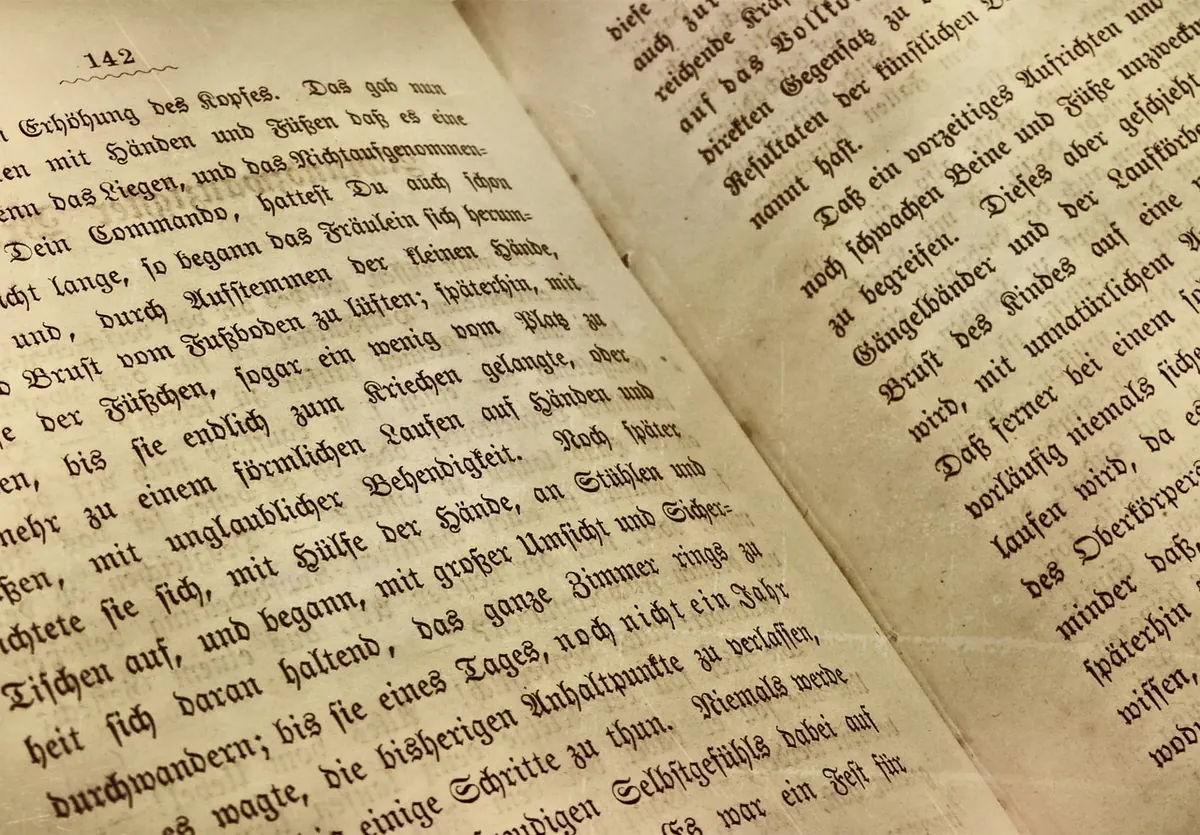
1. Assuming the printed county history is the last word. Victoria County History volumes, Dugdale's Monasticon Anglicanum and county antiquarian journals are good scaffolding. They are also snapshots. A volume written in 1908 could not use the excavation of 1972, or the deeds that surfaced in a solicitor's office in 1994. Read the footnotes as closely as the text. If every page leans on one cartulary, an error in that cartulary has been repeated for a century.
2. Using one transcription of a charter. Nineteenth-century editors expand abbreviations, normalise spelling, and occasionally misread a numeral. When a boundary, a date or a rent matters to your argument, look at a photograph or digital image of the original, and note which version you are quoting.
Mistake 3: Naming cartularies without ever reading them
A cartulary is a manuscript volume in which monks copied the documents they needed to defend their rights: royal grants, papal privileges, leases, boundary perambulations, sometimes letters. They survive in surprising numbers, and they are far more than property registers. Witness lists name local families and help date events. Leases show how the estate was farmed. A dispute with a neighbouring house can reveal water rights, grazing, and who the abbey considered its rivals.
Where cartularies actually turn up
- County record offices and cathedral libraries, often in a county neighbouring the abbey rather than the abbey's own
- The National Archives, among the papers of the Court of Augmentations and of later owners of monastic land
- The British Library, the Bodleian, and older Cambridge college collections
- Antiquarian transcriptions printed in local journals, particularly where the manuscript has since been dispersed or lost
Search under the abbey's Latin name, the names of its granges, and the names of its patron families, not only the modern place name. And remember that a cartulary is a selection, compiled for a purpose. Its gaps were not accidental.
Mistakes 4 and 5: Skipping wills, and searching only one court
4. Dismissing wills as genealogy rather than history. Wills record burial requests in the abbey church, lights burning before named altars, gifts of livestock or a rent, and monks or abbots acting as executors. They also document ordinary relationships a charter never mentions: the tenant who kept the mill, the servant owed wages, the widow holding land of the house.
5. Searching a single probate court. Wills were usually proved where the property lay, but wealthier testators went to a higher court, and the Prerogative Court of Canterbury at The National Archives holds many. Search the diocesan and archdeaconry courts around the abbey alongside the higher ones, and allow a generous date range. Bequests to religious houses continue up to the Dissolution and often reappear later in charity and parish records.
Mistakes 6 and 7: Reading the landscape only as it looks today
6. Treating tithe and enclosure maps as decoration. Tithe maps and their apportionments, drawn up after 1836, name owners and occupiers, give acreages and land use, and show buildings long since gone. Enclosure awards, estate plans and first-edition Ordnance Survey sheets let you watch a monastic precinct become a farm. Compare two maps fifty or a hundred years apart: the moment a wall becomes a field boundary is a research result, not a footnote.
7. Forgetting the surveys made after the Dissolution. Parliamentary and Crown surveys of monastic lands list buildings, lead roofs, mills, fishponds, and who was living where in the 1530s and 1540s. They were compiled to raise money rather than to record history, which is precisely why they are so exact about anything that could be sold.
Mistake 8: Leaving archaeology in the filing cabinet
Excavation reports, watching briefs, building surveys and geophysical surveys sit in county Historic Environment Records, in national grey-literature archives, and in the excavator's own files. They carry evidence written sources rarely give you: diet, floor tiles, window glass, imported pottery, ironworking, the sequence of floors. A published summary sometimes disagrees with the site notebook, so treat both as sources and state which one you relied on.
Mistakes 9 and 10: Reading the evidence too literally
9. Taking dates at face value. Regnal years, saints' days and the old calendar year that began on 25 March all need converting before they will fit a modern timeline. Documents are also often dated by the event they describe rather than the day they were written, which can shift a charter by years.
10. Assuming one name means one place or one person. Abbeys appear under several spellings and Latin endings. A place named in a charter may be a grange, a mill or a field rather than the mother house. Two abbots can share a name, a "monk" in a will can be a lay servant, and a boundary perambulation describes what the community claimed on the day it was walked, not necessarily what it held.
Write the source beside every fact while you still remember where it came from. A timeline without sources is just a story.
A short routine that saves weeks
- Start with the county Historic Environment Record and the local record office catalogue. Search the modern name, the Latin name, the granges and the patron family.
- Read the printed history's footnotes, then go and examine the source it cites for the passage you care about.
- Keep a timeline with a source column, plus a running list of variant spellings as you meet them.
- Order images of the original document wherever a number, boundary or personal name will carry weight in your writing.
- Before drafting, ask of every source: who made it, who paid for it, and what would it never have recorded?
Do that, and your account of the abbey will rest on material most readers have never seen. That is usually where the interesting part of abbey history begins.
Photo: cocoparisienne / Pixabay