
The Yorkshire Abbeys Loop: A 3-Day Heritage Itinerary
A three-day driving and walking loop linking Fountains, Jervaulx, Rievaulx, Byland, Mount Grace and Whitby, with practical tips on timing, parking, paths and where to sleep.
The Yorkshire Abbeys Loop: A 3-Day Heritage Itinerary
Three days, one loop, and the finest monastic ruins in the north of England. This route runs from York west to Fountains, north through Wensleydale and Ryedale to Rievaulx and Byland, then east across the moors to finish on the cliff at Whitby. It is built around driving, but every stop has a walk attached, and no day is long enough to feel like a coach tour.
What follows is a rhythm rather than a rigid schedule. Use the timings as a guide, book the big sites in advance where you can, and leave room for the unexpected: a tea room in a gatehouse, a sudden view over the moors, or half an hour sitting in a ruined choir with only the wind for company.
Day One: Fountains Abbey and the Skell Valley
Leave York early and take the A59 and A1 to Ripon, then the B6265 to the Fountains estate. Aim to be parked by opening. The walk down through the Studley Royal water garden is the right way to arrive: you come over the ridge, the abbey ruins appear below you in the valley, and the day has already justified itself.
Give Fountains and Studley Royal most of a day. The ruins are the largest set of Cistercian remains in the country and take two hours on their own; the eighteenth-century water garden, with its canals, temples and follies, adds another hour of easy strolling. Walkers should add the climb to Anne Boleyn's Seat, the grassy viewpoint above the abbey, and the Seven Bridges Valley, where the River Skell runs through a wooded gorge.
Fountains was founded in 1132 by a small band of Cistercian monks from Clairvaux, and within a century it had become one of the richest abbeys in England. Look for the vast cellarium, where the lay brothers stored grain and wool, and the remains of the lay brothers' infirmary. The ruins are not just a pretty shell; they show how a medieval monastery worked as a farm, a factory, a library and a place of prayer. Studley Royal, laid out by John Aislabie in the 1720s, is a different kind of creation: a Georgian landscape garden designed to frame the ruins and turn the valley into a series of theatrical views.
How long to allow at Fountains
- Short: water garden and abbey ruins, about two hours at a relaxed pace.
- Medium: add the deer park circuit to Anne Boleyn's Seat, roughly ninety minutes more.
- Long: the Seven Bridges Valley and back along the river, half a day in total.
Spend the evening in Ripon, where the cathedral sits a few minutes' walk from the market square. If you time it right you will catch the hornblower sounding the watch at nine o'clock, a ritual the city has kept for centuries. The cathedral's crypt of St Wilfrid is among the oldest in England, and the market square is a good place for a late supper. Sleep in Ripon, or in smaller, quieter Masham if you would rather start day two further north.
Day Two: Jervaulx, Byland and Rievaulx
Head north-west through Masham towards East Witton for Jervaulx Abbey, a Cistercian house in Wensleydale that remains privately owned. It feels different from the state-run sites — the stone is softer, mossier, and you wander at will rather than following a marked route. There is a tea room in the old gatehouse, which makes a sensible pause before the next leg.
Jervaulx was founded in 1156, and its monks were among the first to make a version of Wensleydale cheese, using sheep's milk before cows became common. The abbey was dissolved in 1537 after the Pilgrimage of Grace, and much of its stone was carted away for local buildings. What remains is fragmentary but atmospheric, with arches and walls half-swallowed by grass and ivy. It is a good place to slow down after the scale of Fountains.
From Jervaulx, cut across to Thirsk, top up the tank, then drop south-east to Byland Abbey near Coxwold. Byland has the finest west front of any ruined abbey in Yorkshire, and its great rose window frame still stands above the door. The site is small and often nearly empty, which is part of the pleasure.
Byland was founded in 1177, and at its peak it was one of the wealthiest Cistercian houses in the north. The surviving west front, with its pointed arches and delicate stonework, gives a hint of how impressive the church must have been. Walk the perimeter and you can trace the cloister, the refectory and the warming house. Because it is less famous than Rievaulx or Fountains, you may have the place almost to yourself.
Then Rievaulx, twenty minutes further east. The ruins sit in a bowl of hills and the scale of the church takes a moment to register: the choir and presbytery stand almost to full height, and the site is quiet enough to hear the rooks in the valley. Directly above it, the National Trust's Rievaulx Terrace offers two eighteenth-century temples and a view straight down onto the abbey roofs.
Rievaulx was founded in 1132 and became the first Cistercian abbey in Yorkshire, eventually mother house to a whole network of monasteries across the north. Its most famous abbot, Aelred, wrote spiritual works that are still read today. Standing in the nave, with the tall arches rising around you, it is easy to understand why the site has inspired writers and painters for centuries.
If you have the legs left, walk the Cleveland Way from Rievaulx to Helmsley — about three and a half miles along the hillside above the River Rye, finishing at Helmsley Castle and the edge of town. Otherwise drive round and park in Helmsley. Stay there for the night.
Two great abbeys in a day is plenty. Three turns a heritage trip into a driving test.
Day Three: Mount Grace Priory and Whitby Abbey
Mount Grace Priory, near Osmotherley, is the odd one out and worth the detour. It was a Carthusian house, where each monk lived as a hermit in his own cell, meeting only for services and occasional meals. Founded in 1398, it is the best-preserved Carthusian monastery in England. The reconstructed monk's cell and garden give a vivid sense of a life that was stricter and more solitary than at the Cistercian abbeys.
From Mount Grace, take the A19 north, then the A172 across the moors towards Whitby. The drive over the North York Moors is part of the day: heather, drystone walls, and long views. If time allows, stop at the remains of Rosedale Abbey or the old ironstone kilns at Rosedale, or simply pull in at a moorland viewpoint for a flask of tea.
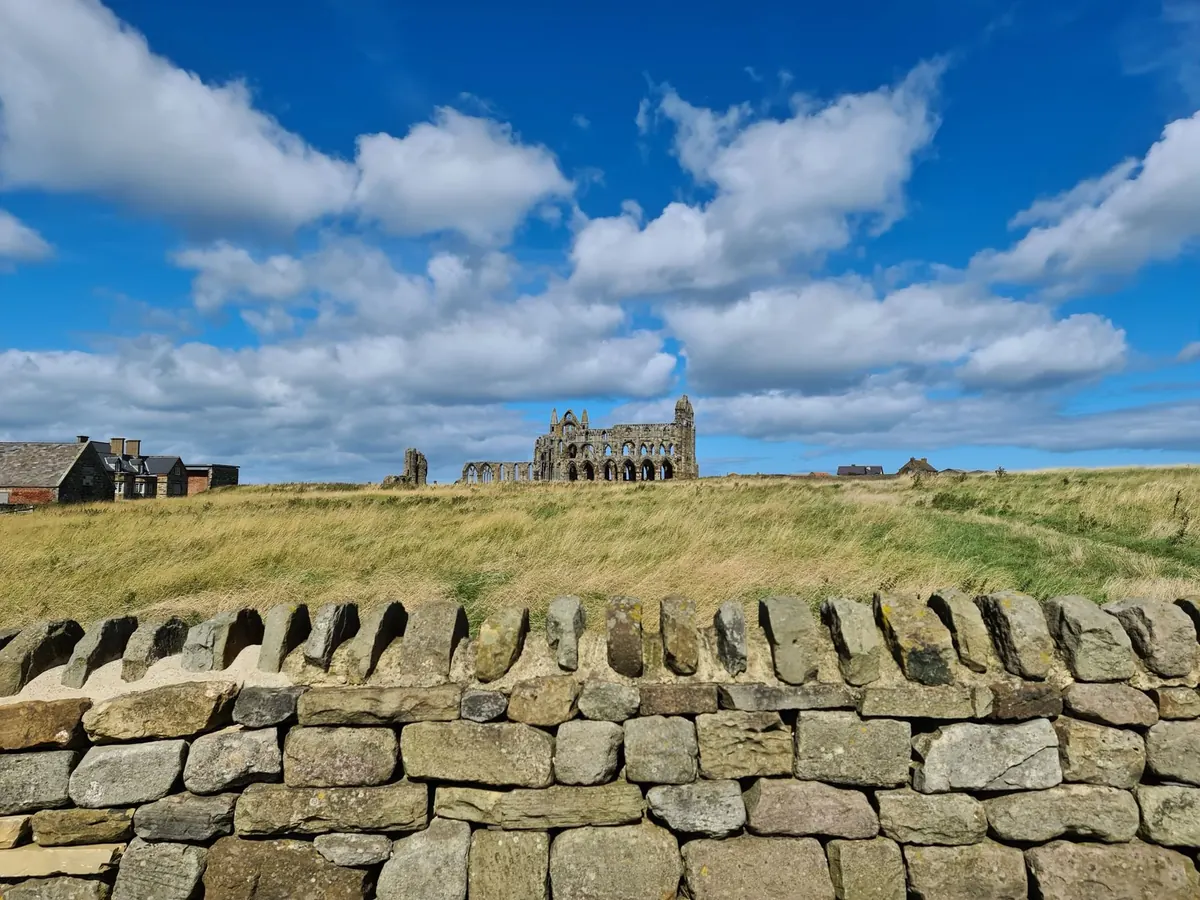
Whitby Abbey is the finale. The ruins stand on the East Cliff above the harbour, reached by the famous 199 steps from Church Street. The site was founded in 657 as a double monastery, and it was here that the Synod of Whitby settled the date of Easter in 664. The present ruins are mostly thirteenth-century, and the skeleton of the church is stark and dramatic against the sky. Below, St Mary's Church and the crowded old town are worth an hour. Bram Stoker fans will recognise the abbey as the setting for part of Dracula.
Finish with fish and chips on the harbour, a walk along the pier, or a climb back up the steps for dusk. Whitby is a good place to stay the night, but if you must return to York, the drive takes about an hour and a half.
Practicalities: Tickets, Parking and Timing
Three days is enough to see the headline sites, but not enough to see everything. Prioritise the abbeys you most want to linger in, and treat the rest as tasters. Check opening times before you set out, especially in spring and autumn, when some sites close at 4pm or 5pm and last entry can be an hour before closing.
- Tickets: Fountains Abbey and Studley Royal, Rievaulx Terrace, and Mount Grace Priory are National Trust; Rievaulx Abbey, Byland Abbey, and Whitby Abbey are English Heritage. Membership of either organisation can pay for itself over this loop.
- Parking: Arrive early at Fountains and Whitby. Rievaulx and Byland have small car parks; Mount Grace has a modest one beside the entrance. Helmsley has pay-and-display parking near the castle.
- Fuel and food: Fill up in Ripon, Thirsk or Helmsley. The moors have long empty stretches, and a full tank removes a low-level worry.
- Best months: May, June and September offer good light, fewer crowds, and heather on the moors. Winter can be atmospheric but some sites have shorter hours.
- What to pack: Sturdy shoes, a waterproof, a warm layer, and a water bottle. The ruins are exposed, and even a sunny morning on the moors can turn breezy by afternoon.
Where to Stay and Eat
The loop works best with two overnight stops: Ripon or Masham after Fountains, and Helmsley after Rievaulx. Whitby is the natural third if you want to finish by the sea. Book ahead in summer, when the coast and the moors are busy.
- Ripon: The market square has pubs and cafes; the cathedral is a few minutes' walk away. It is a sensible base for an early start at Fountains.
- Masham: Quieter, with good access to Jervaulx and Wensleydale. The Black Sheep and Theakston breweries are both nearby if that appeals.
- Helmsley: A handsome market town with the Black Swan and a cluster of tea rooms. It is within easy reach of Rievaulx, Byland and the Cleveland Way.
- Whitby: For the final night, choose a harbour-view room or a guesthouse up the steps. The town is famous for its fish and chips, but there are also good bistros and pubs away from the main drag.
Above all, resist the urge to tick off every site. The Yorkshire abbeys are not a checklist. They are places to stand still, listen to the rooks, and let the centuries do the talking.
Photo: Antony Martindale / Pexels