


Visiting Abbeys in Autumn: Best Light, Crowds, and Photo Spots
Plan autumn abbey visits around low golden light, quieter weekday mornings and colourful ruins photography, with practical tips on timing, kit and crowds.
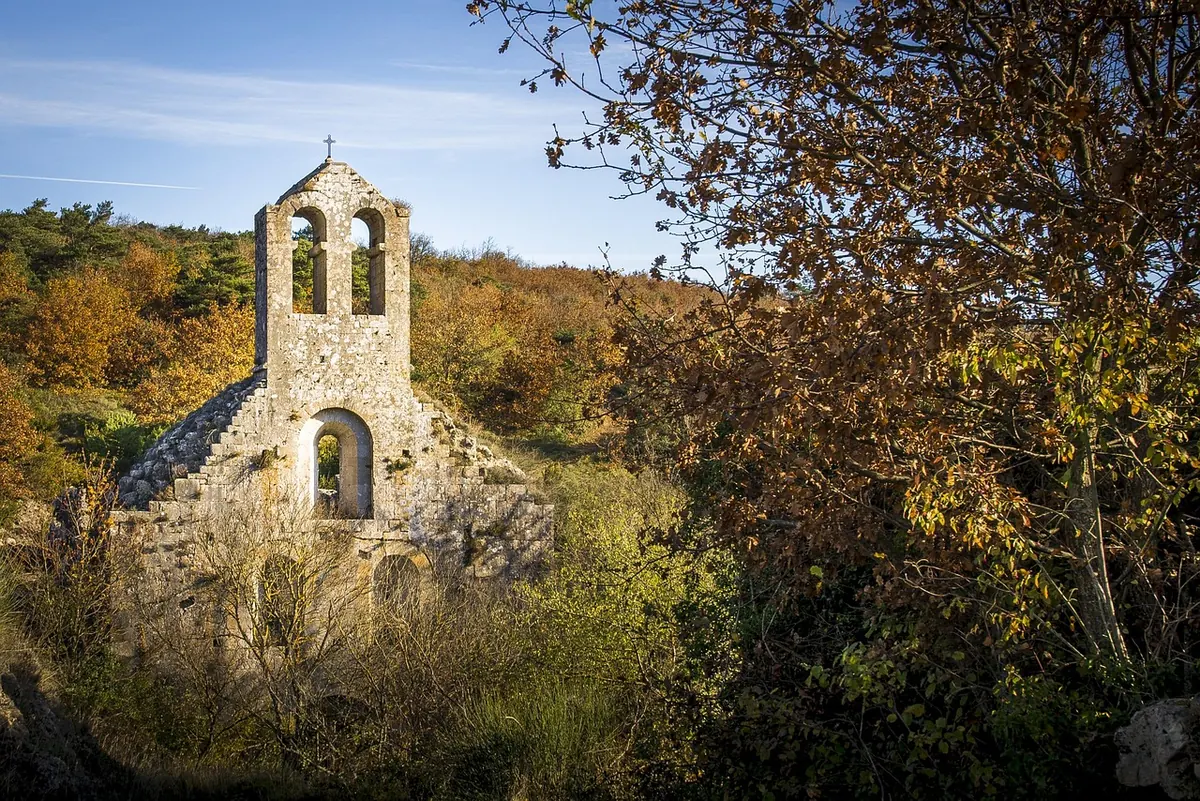
Autumn does something to an abbey ruin that summer never quite manages. The sun sits lower, raking across broken arcades and picking out the grain of the stone. Ivy turns copper, leaves gather in the cloister garth, and the school-holiday crowds thin out. You get the same walls and the same echo under the vaulting, but the light has more shape to it, and you can hear your own footsteps.
That is the case for planning an abbey visit between late September and mid-November. It is also a season with real constraints: daylight runs out early, rain changes the ground underfoot, and many sites shorten their opening hours once the summer season ends. Here is how to build a day around those limits rather than against them.
Why Autumn Suits a Ruined Abbey
A ruined abbey is, in effect, a piece of sculpture at architectural scale. Harsh summer light flattens it; low autumn light gives it depth. Every moulding, every worn capital and every shadowed window reveal reads more clearly when the sun is grazing rather than overhead.
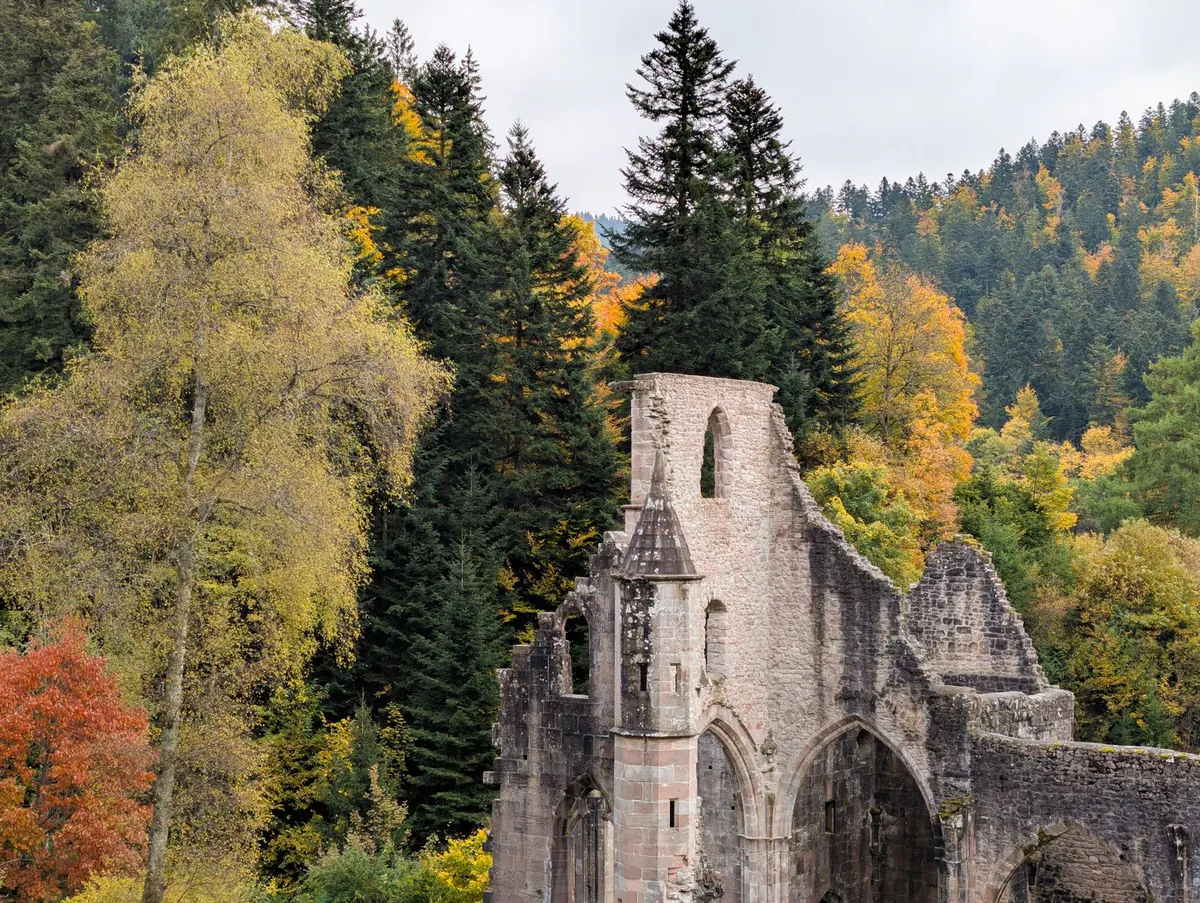
Colour does the rest. Beech, sycamore and lime turn around the precinct walls while the stone stays cool grey, and the contrast is what makes autumn photographs of abbeys look the way they do. Ivy and valerian, still green in July, take on red and bronze tones that echo the masonry.
Then there is the practical advantage: from the second week of September, midweek visitor numbers drop sharply at most sites. You will still find busy weekends, but a Tuesday morning in October can feel almost private.
Chasing the Best Light Through the Day
Early morning
The first hour after opening is the best hour, for two reasons. The light is soft and directional, and you will have the cloister to yourself. Work out which way the main remains face before you go: an east-facing window wall catches the sun early, while a west front glows in the afternoon. Check a map or satellite view in advance and plan your route accordingly, rather than wandering and hoping.
Mist is a bonus. On a still, damp morning, low-lying fog around a ruined nave gives you separation between the foreground and the towers behind, which is hard to fake later.
Mid-afternoon to golden hour
Autumn golden hour lasts longer than summer's because the sun never climbs high in the first place. The catch is that many ruins close before the light gets really good. If last entry is mid-afternoon, treat that as your deadline and shoot the interior first.
For later light, look for public footpaths, bridges and lanes that give exterior views of the ruins. River valleys are especially useful: a path on the opposite bank often frames the whole abbey, and you can stay as long as the light holds.
Flat grey days
Do not write off an overcast day. Diffused light is ideal for carved detail, chapter house tiles, corbels and inscriptions, because there are no blown highlights to fight. Wet stone also darkens and saturates, and puddles in the nave make useful mirrors. Take a cloth, keep the lens hood on, and shoot close.
Working Around the Crowds
Autumn crowd patterns are predictable once you know what drives them.
- Weekday mornings beat weekends at almost every site, in every month.
- Half-term breaks are the big exception. They fall at different times in different nations and regions, so check your local dates before booking anything.
- Event days — harvest festivals, candlelit evenings, apple days, ghost tours — fill a site quickly but offer atmosphere you cannot get at midday. Decide which you want, then commit.
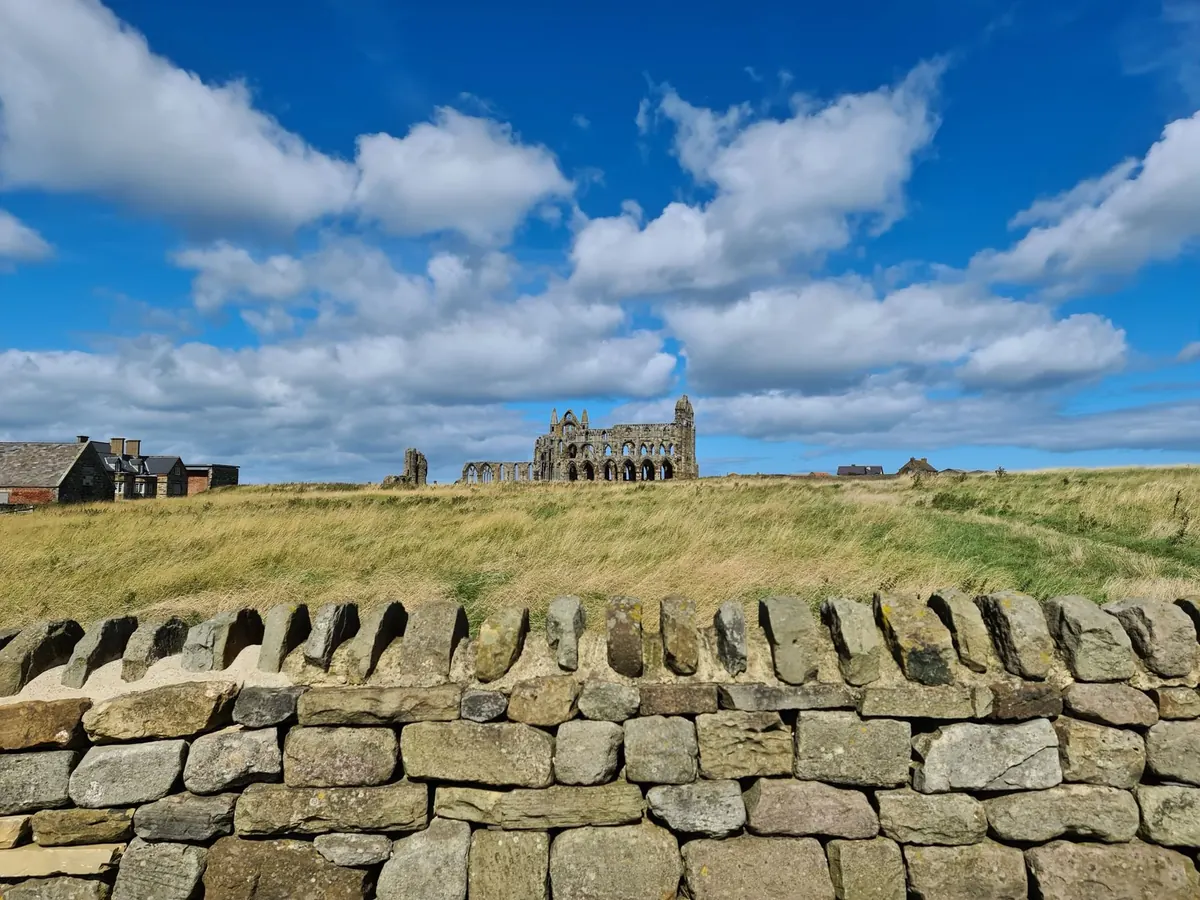
- Famous names such as Fountains, Whitby or Glastonbury draw visitors all year. Smaller houses, from Kirkstall to Netley or Valle Crucis, are far quieter and often just as rewarding.
- Lunchtime brings a brief lull as coach parties move on. It is a good moment to revisit the busiest view.
Arriving at opening remains the single most effective tactic. Fifteen minutes of planning buys you an hour of empty cloister.
Photo Spots and Compositions Worth Trying
Rather than hunting for a single magic vantage point, work a short list of reliable ideas. They translate to almost any abbey.
- Frame through an arch. Stand back and let a window or doorway hold a distant tower inside it, with autumn foliage softening the edges.
- Use the arcade as repetition. Line up with the columns of the nave or cloister so they recede in a rhythm; a low angle strengthens it.
- Shoot into the light. Backlit leaves and silhouetted tracery give a moody, graphic result, especially in late afternoon.
- Look down. Fallen leaves on ledger stones, moss between tiles and wet flagstones make quiet, textured images.
- Include a person for scale. One figure at the far end of a nave says more about size than any wide lens on its own.
Respect the fabric while you work. Stay off walls and fallen masonry, keep tripods out of narrow passages, and check the site's rules on drones and commercial photography before you set up. Many ruins are also active burial grounds or places of worship, so keep voices low near graves and inside surviving chapels.
What to Wear and Carry
Autumn ground is the real challenge: wet grass, slick flagstones and leaf-covered steps. Waterproof boots with proper grip matter more than a coat. Bring a light shell, a warm mid-layer and thin gloves, because stone and metal handrails get cold fast. A flask is worth the weight at a site with no café.
For photography, pack a microfibre cloth, a spare battery kept in an inside pocket, and a small torch for dark interiors or a late exit. If you use a tripod, check whether it is permitted indoors, and never block a doorway.
Before You Go: A Short Checklist
- Confirm opening hours and last entry — they often shorten after the clocks change.
- Check who runs the site and whether your membership card covers it, or whether entry is free.
- Note sunrise and sunset, and allow at least ninety minutes on site.
- Read the weather and any path or access closures after heavy rain.
- Look for events, filming closures or conservation scaffolding.
- Check facilities — many small abbeys have no toilets, café or parking.
- Note dog, picnic and photography rules.
If the ruins matter to you, walk them twice: once at pace to get the layout, then slowly, back towards the entrance, when the light has changed. Finish with tea in the nearest town while your boots dry. Autumn rewards the visitor who arrives early, dresses for mud and stays curious about detail — and it will hand you photographs that summer crowds never let you take.
Photo: siala / Pixabay